
The Chick-fil-A franchise opportunity is one of the most searched topics in the fast-food industry because it offers a very different model compared to traditional franchises like McDonald’s or KFC. Many investors search terms like “Chick-fil-A franchise cost,” “how much is a franchise of Chick-fil-A,” and “is Chick-fil-A franchise worth it” to understand whether this business is a real ownership opportunity or more of an operator-based system.
Unlike most franchises, Chick-fil-A operates on a unique operator model, where the company retains ownership of land, buildings, and equipment while selecting individuals to run the restaurant as hands-on operators. This makes it both highly attractive and extremely competitive.
What is Chick-fil-A Franchise?
A Chick-fil-A franchise is not a traditional franchise where you buy and own a business. Instead, Chick-fil-A selects individuals as “Operators” who manage and run a single restaurant location.
These operators:
- Do not own the restaurant property
- Cannot sell the business
- Must work full-time in operations
- Are responsible for daily leadership and team management
This model focuses on leadership, culture building, and operational excellence rather than passive investment.
Chick-fil-A Franchise Cost (2026)
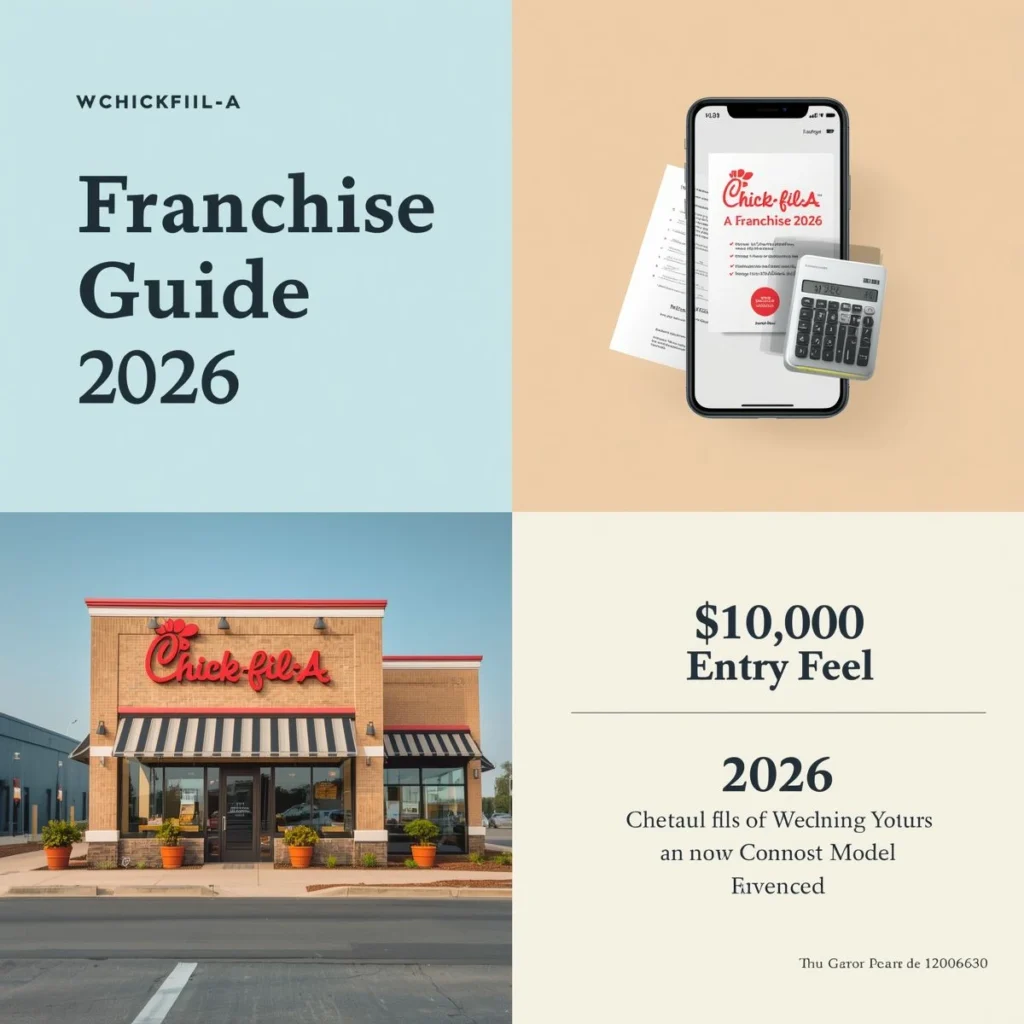
One of the biggest reasons people search “Chick-fil-A franchise cost” is because the entry fee looks surprisingly low compared to other fast-food brands.
Initial Franchise Fee
- $10,000 (USD) non-refundable fee
However, the real investment is much higher when operating costs are included.
Estimated Total Investment
Even though Chick-fil-A covers land, building, and equipment, operators still handle operating expenses:
- Opening inventory: $22,000 – $84,000
- Insurance & setup costs: $10,000+
- Additional operating funds: $400,000 – $2,000,000+ (varies by location)
So, while the franchise fee is $10,000, the real operational setup can reach $400K – $2.3M indirectly managed costs.
Why Chick-fil-A Franchise Fee is So Low?
The low entry fee exists because Chick-fil-A follows a unique system:
- Company owns real estate and equipment
- Franchisees do not build equity ownership
- Operators share revenue instead of owning assets
- Company selects only highly qualified candidates
This makes it more like a business partnership role rather than traditional franchising.
Chick-fil-A Franchise Requirements
To become a Chick-fil-A operator, candidates must meet strict requirements:
Basic Requirements
- Legal right to operate in the U.S. or approved country
- Minimum $10,000 upfront fee
- 5+ years professional experience
- Leadership experience managing teams
- Full-time hands-on commitment
Financial & Personal Requirements
- No bankruptcy history
- Must leave other business ventures
- Strong financial responsibility
- Ability to work long hours (50–60 hours/week)
Key Expectation
Chick-fil-A clearly states this is a “life investment, not a passive income opportunity.”
How Much is a Franchise of Chick-fil-A?
People often search “how much is a franchise of Chick-fil-A” expecting ownership costs like McDonald’s or Subway.
The reality is:
- You don’t buy the restaurant
- You don’t own the land
- You operate under Chick-fil-A branding
- You earn income based on performance and agreement structure
It is more accurate to say you “apply to operate a Chick-fil-A restaurant” rather than purchase a franchise.
Chick-fil-A Franchise Profit & Earnings
Although Chick-fil-A is one of the highest-grossing fast-food brands, earnings vary by location.
Average Performance
- Average annual sales per store: $5M – $9M+
- Estimated operator income: $150,000 – $300,000+ per year
However:
- Profits are shared with the company
- Operators do not build long-term equity
- Income depends heavily on performance and location
Advantages of Chick-fil-A Franchise
- Very low startup fee compared to competitors
- Strong brand reputation in the U.S. fast-food market
- High customer demand and loyal customer base
- Full corporate support (marketing, location, setup)
- Proven business model with strong sales performance
Limitations of Chick-fil-A Franchise Model
- No ownership of business assets
- No multi-unit expansion for most operators
- Highly competitive selection process (<1% acceptance rate)
- No passive income structure
- Strict full-time operational involvement required
Is Chick-fil-A Franchise Worth It?
The answer depends on your goals.
If you want:
- Ownership and asset building → ❌ Not ideal
- Passive income → ❌ Not suitable
- Leadership role in a strong brand → ✅ Excellent opportunity
Chick-fil-A is best described as a highly structured operator business opportunity rather than a traditional franchise investment.
FAQs
1. Chick-fil-A franchise cost?
The official franchise fee is $10,000, but operational requirements and setup costs make it a much larger commitment in practice.
2. How much is a franchise of Chick-fil-A?
You don’t buy a franchise in the traditional sense. Instead, you apply to become an operator, and expected total involvement can indirectly represent $400K+ in business responsibility and setup management.
3. Is Chick-fil-A franchise a good investment?
It can be a strong opportunity for experienced leaders who want hands-on management of a proven brand. However, it is not ideal for investors seeking ownership or passive income.
Conclusion
The Chick-fil-A franchise opportunity stands out in the fast-food industry due to its unique operator-based structure, low entry fee, and strong brand power. While the Chick-fil-A franchise cost ($10,000) looks attractive, the real value lies in leadership, operational responsibility, and full-time commitment.
This is not a traditional franchise model—it is a career-level business leadership role inside one of America’s strongest food brands. For individuals with strong management skills and dedication, it can be a highly rewarding path, but for those seeking ownership or passive investment, other franchise models may be more suitable.