
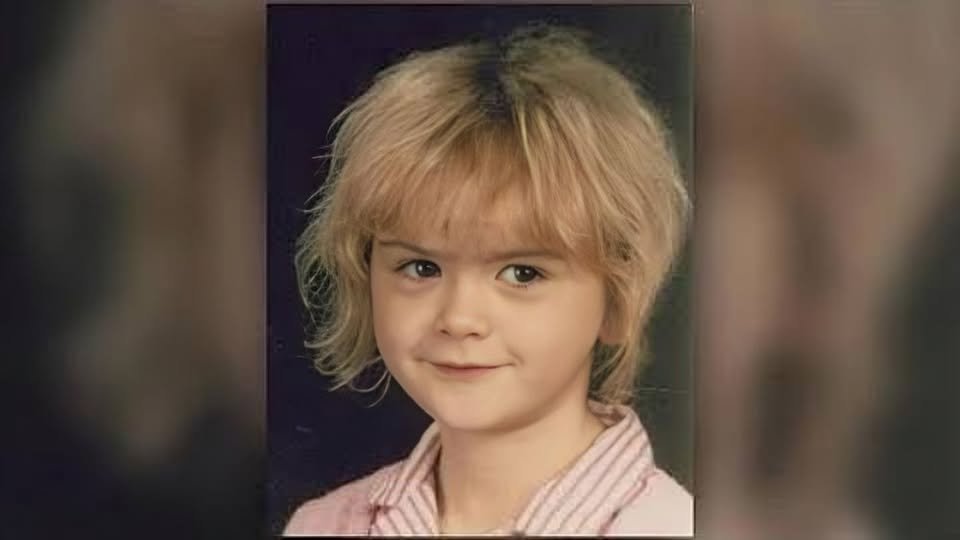
On a quiet spring afternoon in Fort Wayne, Indiana, when the air still carried a chill and the world felt calm and familiar, eight-year-old April Marie Tinsley spent the day the way children are meant to, moving through laughter and play without any sense of danger, unaware that this ordinary moment would become the last chapter of her childhood. It was April 1, 1988, and the neighborhood around her felt safe in the way small communities often do, where parents trusted the streets and children walked freely between homes, believing the world beyond their front doors was kind.
April had been visiting a friend that day, passing the hours in simple joy, and as the afternoon faded toward evening, she began the short walk home along a route she knew well, one she had traveled many times before without fear or hesitation. It was a familiar path, just a few blocks long, and nothing about that walk suggested danger, yet somewhere along the way, a stranger crossed her path, and in that brief, irreversible moment, everything changed.
When April failed to return home, concern quickly spread through her family, then through the neighborhood, and finally across the entire city as panic replaced hope and police officers, neighbors, and volunteers searched streets, fields, and alleys, calling her name into the growing darkness with voices that trembled under the weight of dread. For three agonizing days, Fort Wayne waited, clinging to the possibility that April would be found alive, that this story would end with relief instead of grief.
Instead, the city was forced to face a nightmare.
April’s body was discovered in a ditch outside the city, and with that discovery, a sense of safety that could never be restored was lost forever, as parents held their children closer, doors that once remained unlocked were sealed tight, and fear settled into daily life like an uninvited guest. Investigators vowed to find the person responsible, promising answers to a family whose lives had been permanently fractured, but as weeks turned into months and months into years, the case slipped into silence without resolution.
Then, just when the community believed the worst had already been endured, the killer returned—not in person, but through words.
In 1990, a handwritten message appeared on a barn near where April had been found, a chilling taunt that confirmed the person responsible was still free, still watching, and still capable of unimaginable cruelty, and the message sent a wave of terror through Indiana that lingered for decades. More writings followed over the years, each one reopening wounds that never healed and reinforcing the horrifying truth that April’s killer remained at large, hidden among ordinary lives, while her family continued to wait for justice that seemed endlessly out of reach.
Despite the passage of time, April’s case was never forgotten. Detectives inherited the file as careers changed, evidence was carefully preserved, and experts revisited every detail, determined that the truth would someday emerge, even as hope faded and the years quietly accumulated into decades.
That breakthrough finally came not through chance, but through science.
In 2018, investigators turned to genetic genealogy, a powerful forensic tool capable of tracing DNA through family lines, and what it revealed stunned everyone involved, leading them not to a distant suspect, but to John D. Miller, a man who had lived quietly only miles away from where April had been taken. When confronted with the evidence, he confessed, ending a thirty-year mystery that had haunted an entire community.
In court, April’s family spoke of the little girl they loved, the child whose laughter once filled their home, and the decades of birthdays, milestones, and ordinary moments stolen from them, while also expressing gratitude for the investigators and scientists who refused to let April’s name fade into history.
April Marie Tinsley was only eight years old, a child who loved dolls, friends, and the small joys of childhood, and she deserved a life filled with warmth, safety, and possibility rather than the violence that ended it far too soon. Although her life was brief, her legacy is lasting, as her case helped advance forensic science, strengthened investigative methods, and proved that even after decades of darkness, truth can still surface.
April is remembered not for the cruelty inflicted upon her, but for the light she carried, a light that survived thirty years of silence and ultimately led the world to justice, reminding us that time may pass, but the truth does not disappear.