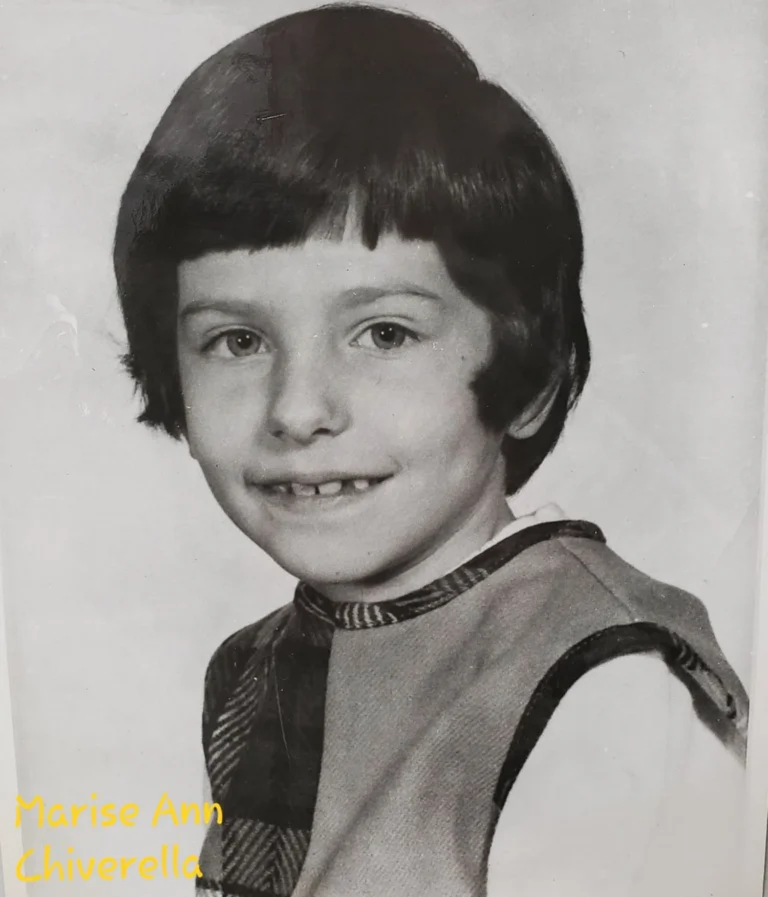

Sarah Payne had bumped her head and just wanted to get back to her grandparents when a known paedophile saw her and decided he had the right to murder her.
On July 17th, 2000, Luke Coleman was clearing ragwort from an overgrown field beside the A29 near Pulborough, West Sussex, England. As he worked, he thought he saw the body of a deer hidden behind a row of ferns. The closer he got, he realised it wasn’t a deer but rather the naked body of a child partly buried under mud and plants near a rarely used footpath.
He was “so shocked” he wouldn’t be able to recall how she was laid. What he could remember was that several of her limbs were detached, and based on the smell and appearance, he believed the body was decomposing. In a “dazed” state, he ran home and called the police.
Back on July 1st, an 8-year-old girl vanished while walking back to her grandparents’ home.
Sarah Payne, her parents and her three siblings went down to Kingston Gorse to visit the kids’ grandparents, taking the chance to go for a family walk on the nearby beach. The four siblings decided they wanted to play in a cornfield not too far away, the older boys promising to keep an eye on the younger girls.
As they played hide-and-seek, Sarah bumped her head and bickered with her siblings about going back to their grandparents because she was hurt. When they didn’t want to go, Sarah took herself back, quickly chased by her eldest brother, Lee.
The 13-year-old was only seconds behind Sarah as she cut through a hole in the hedge onto Kingston Lane. When he reached the same lane, he should be able to see her. But all that was there was a white van speeding his way, the driver smiling and waving as he passed Lee.
Sarah was last seen heading onto Kingston Lane at around 8 pm, shortly after the police were notified. Officers and fire crews worked through the night to search for her. The following morning, more than fifty officers and eighty volunteers joined a fingertip search; the morning after that, the search went nationwide.
They, however, didn’t know they should be looking for a white van because Lee didn’t mention what he’d seen right away. His panicked reasoning was that he didn’t want to worry anyone because what if it was nothing? He realised he should speak up after the police organised for four local children to reconstruct Sarah’s last known movements on the 7th.
The police had other methods of searching and even made an arrest on July 2nd of a known paedophile, Roy Whiting. The police went to his flat in Littlehampton, a few minutes’ drive from East Preston, near the field where the Payne kids were playing, but Whiting wasn’t present.
Five hours later, they circled back to him after questioning the others on their suspect list. For about an hour, the police spoke to Whiting about what he did on July 1st, or at least what he claimed he was doing. When they left, an undercover officer was waiting across the street, watching the building for Whiting.
The officer wasn’t waiting long since Whiting left his flat, getting into his white van just after the uniformed officers had left. When the police confronted him, they described him as being “extremely nervous” and “was visibly shaking so much so he actually had problems switching off the engine”.
In the first questioning, Whiting told the police he was drifting park to park because he was bored. Specifically, he claimed he stopped in Shoreham-by-Sea, moved on to a boating lake near the A29 to Hove, then he stopped at two parks and a fair until around 7:10 pm to 7:30 pm. But when he was arrested and interviewed by the police, he refused to speak about Sarah and what he did on the 1st.
Whiting was released on bail forty-eight hours after his arrest. He returned to his hometown of Crawley, not going to his father but rather living rough in a tent in a field.
For 16 long days, the Payne family worked with the police and media to plead for their daughter’s safe return while the police worked tirelessly to bring her home. That’s when, at 11 am, Luke Coleman found the body of a young girl in a field less than 12 miles away from where Sarah was last seen.
The body was confirmed to be Sarah’s on the 18th, with pathologists unable to determine the exact cause of death due to decomposition. But it was determined she was likely killed a matter of hours after being abducted, dumped in the shallow grave where she was found shortly after her murder.
They couldn’t find “pathological evidence to show sexual assault, but the possibility of sexual interference could not be excluded.” Decomposition could have erased that evidence, too. The pathologist, based on everything involved, determined that Sarah’s death was “sexually motivated homicide.” The most likely cause of death was deemed asphyxia, strangulation or both.
While on bail, Whiting was arrested following a high-speed chase in Crawley; it ended with Whiting crashing into a parked vehicle. For this, he would be jailed for 22 months after pleading guilty to taking a vehicle without consent and dangerous driving.
During his time in police custody, the police conducted testing on Whiting’s white 1988 Fiat Ducato van, which he bought on the 23rd of June, 2000. The pattern of purchasing a vehicle shortly before an attack on a young girl mirrored that of a 1995 attack that Whiting was convicted of.
It was early 1995 when he kidnapped a nine-year-old girl, threatened her with a knife and let her go, without her clothes, after sexually assaulting her. Weeks after the crime was reported, Whiting was arrested after someone reported that he had recently sold his red Ford Sierra, the same car used in the attack.
He could have gotten a life sentence after pleading guilty to kidnapping and indecent assault, but following a criminal psychiatrist concluding he was “high risk” but with “no paedophile tendencies”, he was given only four years. Whiting would then serve half of that when he was scheduled for release, only being kept for an additional six months because he refused to participate in a sex offender rehab program.
This entire crime and conviction weren’t known publicly or by Sarah Payne’s family until after he was convicted of Sarah’s kidnapping and murder on December 12th 2001. It was after seven months of investigation and around ten months of trial before Whiting was sentenced to life.
His minimum tariff was set at 50 years, meaning he wouldn’t be eligible for release until age 95. Sadly, this was reduced to 40 years in 2010.
From this crime and the fact that Whiting’s prior attack on a young girl was kept hidden, a law known as Sarah’s Law was created. It was initially meant to allow the public to access the Sex Offender’s Registry, but it was adjusted so parents with young children can contact the police about a named individual frequently in their child’s life to know about previous sex offences.
That’s all for this case. Thank you for reading!