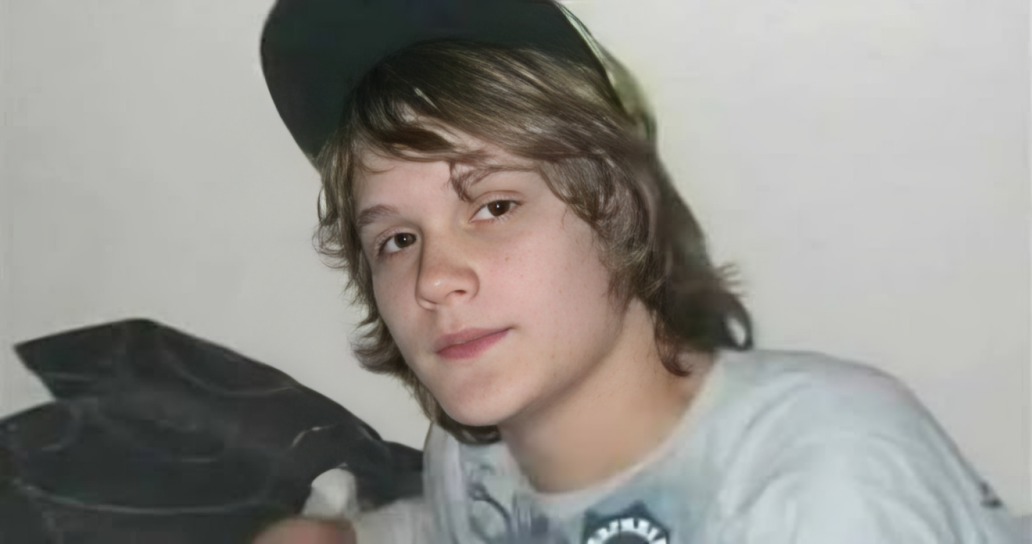
In April 2011, a group of teenagers and young adults in rural Marion County, Florida, carried out a murder so calculated and so brutal that it would go on to shock the entire country — not just because of what was done to 15-year-old Seath Jackson, but because of how many young people were involved in planning and carrying it out. What began as an ordinary teenage breakup spiraled, over the course of a few weeks, into an ambush, a shooting, a burning, and the disposal of a body in a rock quarry. Five people would eventually be convicted for his death. One would be sentenced to die.
A Teenage Relationship Turns Toxic
Seath Tyler Jackson was born on February 3, 1996, in Belleview, Florida, and grew up nearby in Summerfield with his two older brothers. He was a student at Belleview High School, described by those who knew him as an ordinary teenager living an ordinary life in rural Marion County, just south of Ocala.
In December 2010, when Seath was 14, he began dating a classmate named Amber Elizabeth Wright, who was also 15. Their relationship lasted a few months before ending badly in March 2011, reportedly after Seath came to believe Amber had been unfaithful. What followed was the kind of conflict that plays out among teenagers everywhere — arguments, accusations, and a public feud on Facebook — except this one had an added and lethal ingredient. Amber quickly moved on to a new boyfriend: 18-year-old Michael Shane Bargo Jr.
Bargo, by multiple accounts, developed an intense hatred for Seath, reportedly under the mistaken belief that Seath had been abusive toward Amber during their relationship. The online sniping between the two boys escalated into real-world confrontation. In early April 2011, Bargo and Amber’s 16-year-old brother, Kyle Hooper, fired a gun during a confrontation with Seath and a friend at the home of an acquaintance, Charlie Kay Ely, apparently intending to frighten him off.
It didn’t end there. According to court records and later reporting, Bargo had decided Seath needed to die, and he began recruiting others to help him do it.
The Ambush
On April 17, 2011, the plan was set into motion. Amber Wright reached out to Seath and convinced him to come to Charlie Ely’s mobile home in rural Summerfield, roughly 15 miles southeast of Ocala, under the pretense that she wanted to talk about getting back together. Seath had no idea he was walking into an ambush orchestrated by his ex-girlfriend and her new boyfriend.
When he arrived, he was attacked by Bargo, Kyle Hooper, and 20-year-old Justin “Roach” Soto. According to court testimony, Seath was beaten with sticks and held down while Bargo shot him with a .22-caliber revolver. Even after being shot, Seath tried to escape the house — he was shot again, and this time the wound was fatal.
In the aftermath, the group burned Seath’s body in a fire pit in the backyard and scrubbed the house with bleach in an attempt to erase the blood evidence left behind. The following morning, James Havens, the 37-year-old stepfather of Wright and Hooper, arrived at the property and helped the group finish covering their tracks. Seath’s remains were placed into five-gallon paint buckets, driven to a water-filled limerock quarry in Ocala, and dumped — some of the buckets weighted down with cinder blocks to keep them submerged.
The Case Unravels
The group’s plan to get away with murder didn’t survive long. As news coverage of Seath’s disappearance began to spread, Kyle Hooper broke down and confessed to his mother while watching a report about the missing teenager on television. That confession set off a chain reaction. Investigators quickly rounded up the others involved, and forensic examiners later found Seath’s blood mixed with the DNA of several of the defendants in blood spatter throughout the mobile home. Divers searching the Ocala quarry recovered the buckets containing his remains.
A funeral for Seath Jackson was held on April 23, 2011, at First Baptist Church of Summerfield — before the full details of what had happened to him were even publicly known.
The Trials and Sentences
Although several of the defendants were juveniles at the time of the murder, prosecutors chose to try each of them separately as adults, given the severity and premeditation of the crime.
Michael Bargo, identified by prosecutors as the ringleader and the person who fired the fatal shots, was convicted of first-degree murder in August 2013. A jury recommended a death sentence by a 10–2 vote, and a circuit judge sentenced him to death, making him one of Florida’s youngest death row inmates at the time. That sentence was later vacated on appeal after the U.S. Supreme Court’s ruling in Hurst v. Florida, which required death sentences to be based on a unanimous jury recommendation. At a new sentencing hearing in 2019, a jury unanimously recommended death again, and Bargo remains on Florida’s death row.
Amber Wright was convicted of first-degree murder for luring Seath to the mobile home. Her first conviction was overturned due to a trial error, but a second jury convicted her again, and she was sentenced to life without the possibility of parole. Under Florida’s juvenile sentencing laws, her case is eligible for review after 25 years, meaning she could have a sentencing review around 2041.
Kyle Hooper, tried simultaneously with Wright before separate juries, was also convicted of first-degree murder and sentenced to life without parole.
Justin Soto pleaded guilty to first-degree murder and was sentenced to life in prison.
Charlie Ely, in whose home the murder took place, was originally convicted of first-degree murder and sentenced to life without parole as well. Nearly a decade later, her conviction was vacated and she was granted a new trial. In June 2020, she pleaded guilty to a reduced charge of second-degree murder and was released, having already served time equivalent to her new sentence.
James Havens, who helped dispose of Seath’s remains after the killing, pleaded guilty to being an accessory after the fact and was sentenced in 2018.
A Case That Still Resonates
What continues to make Seath Jackson’s murder so unsettling, more than a decade later, isn’t just its brutality — it’s how many young people were drawn into planning and carrying it out, and how a breakup and a string of social media arguments among teenagers escalated into a premeditated killing. The case remains a frequently revisited example in discussions of teen violence, group dynamics, and how quickly online conflict can spill over into real-world tragedy.
Seath Jackson would be approaching thirty years old today. Instead, his name is remembered as the center of one of Florida’s most disturbing true crime cases of the past two decades.